
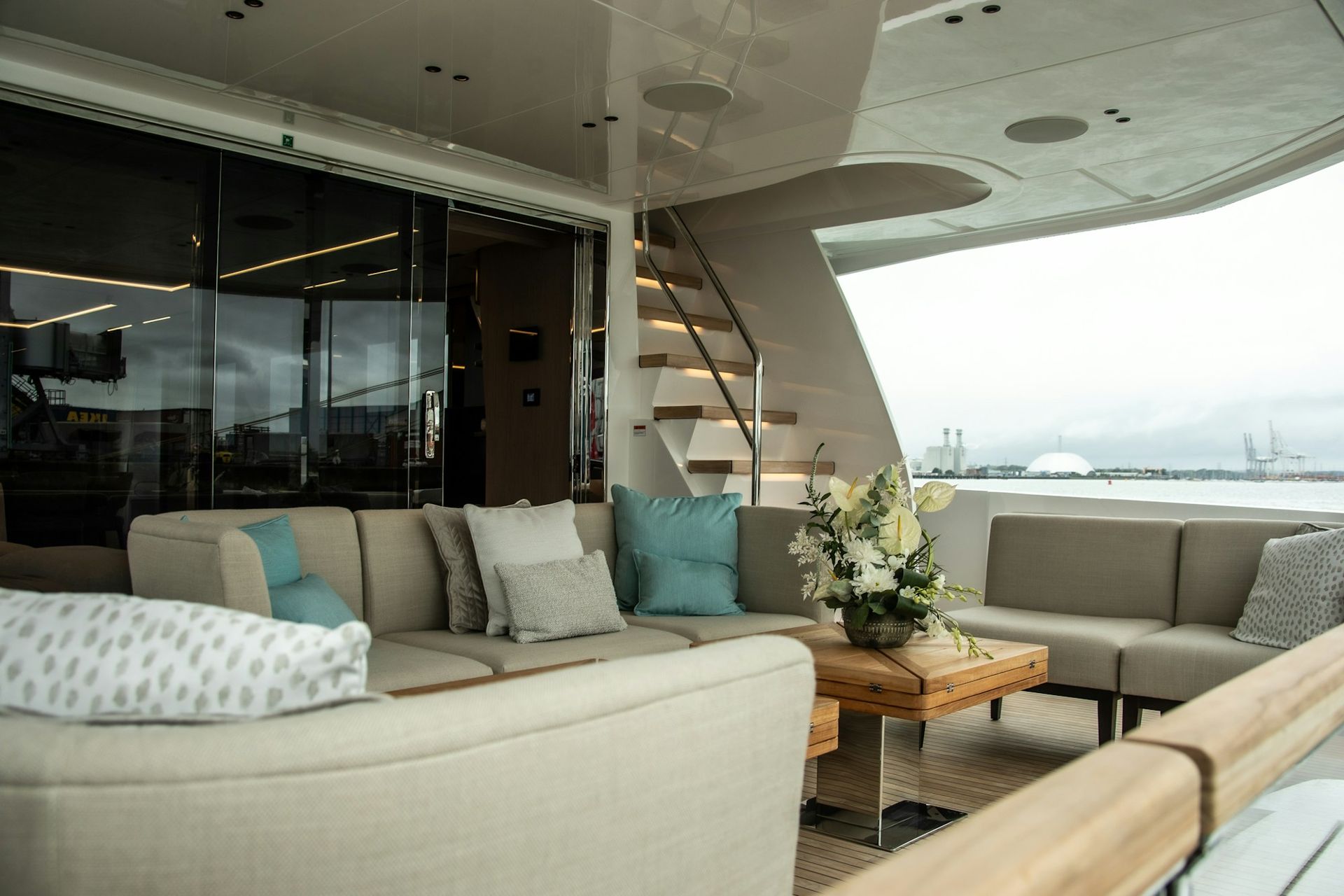
In a yacht refit, the audio and video system should be planned at the very start, before walls and furniture are built. First define use scenarios and zones for each area; then decide marine-rated equipment, cable routes, network and technical space together with the interior design.
In a yacht refit project, besides furniture, lighting, upholstery and mechanical systems, the audio and video infrastructure is another important subject that must be planned early.
Listening to music on a yacht, watching films or providing independent media use in different living areas is not possible just by choosing the right equipment. Sea conditions, limited space, cable routes, network infrastructure and interior design details must be assessed together.
So when planning an audio and video system in a yacht refit, the first question should not be "Which products should we use?" but "What kind of experience is targeted in which areas of the yacht?"
Correct planning directly affects both system performance and the overall design integrity of the yacht.
When Should the Audio and Video System Be Planned?
The best time is the early stages of the refit project.
Adding audio and video infrastructure after wall, ceiling and furniture work is complete can create constraints in cabling, installation and aesthetics.
So at the start of the project, these should be defined:
- Speakers for the saloon and living areas
- Open-deck audio system
- Music solutions in cabins
- Television and screen positions
- Subwoofer placement
- Amplifier and electronics areas
- Network and Wi-Fi infrastructure
- Control systems
This way technical equipment stops being something added to the interior project later and becomes a natural part of the design.
Use Scenarios Must Be Defined First
Every yacht is used differently.
Some users prioritise a strong music experience in the saloon and on the outer deck, while in other projects cinema, television and multiroom systems may matter more.
So before system design, these questions should be answered:
- Which areas will music be played in?
- Will each area be controlled independently?
- Can the saloon and the outer deck play the same music?
- Will there be separate audio systems in the cabins?
- Will the television be used only in the saloon?
- In which areas will films and streaming services be accessible?
- Will the system be controlled from a phone or tablet?
The answers to these questions form the foundation of the system architecture.
Why Is Zoning Important on a Yacht?
Audio systems on yachts are mostly designed as different zones, that is, independent areas of use.
For example, these can be planned as independent audio zones:
- Main saloon
- Master cabin
- Guest cabins
- Flybridge
- Cockpit
- Foredeck
- Aft deck
Each zone can have its own volume, content source and control options.
So while calm music plays in the saloon, a different playlist can be used on the outer deck.
In multiroom and multi-zone systems the aim is not just to produce sound everywhere on the yacht, but to allow each area to be controlled according to its own purpose.
Larger yachts benefit from multi-zone distribution amplifiers such as the B&W CDA-16 for saloons and cabins, and marine media centres such as the WS-MC-2 on deck, which make zone control easier.
Choosing Speakers Suited to the Marine Environment
In yacht projects, speakers must suit not only sound quality but also the conditions where they are used.
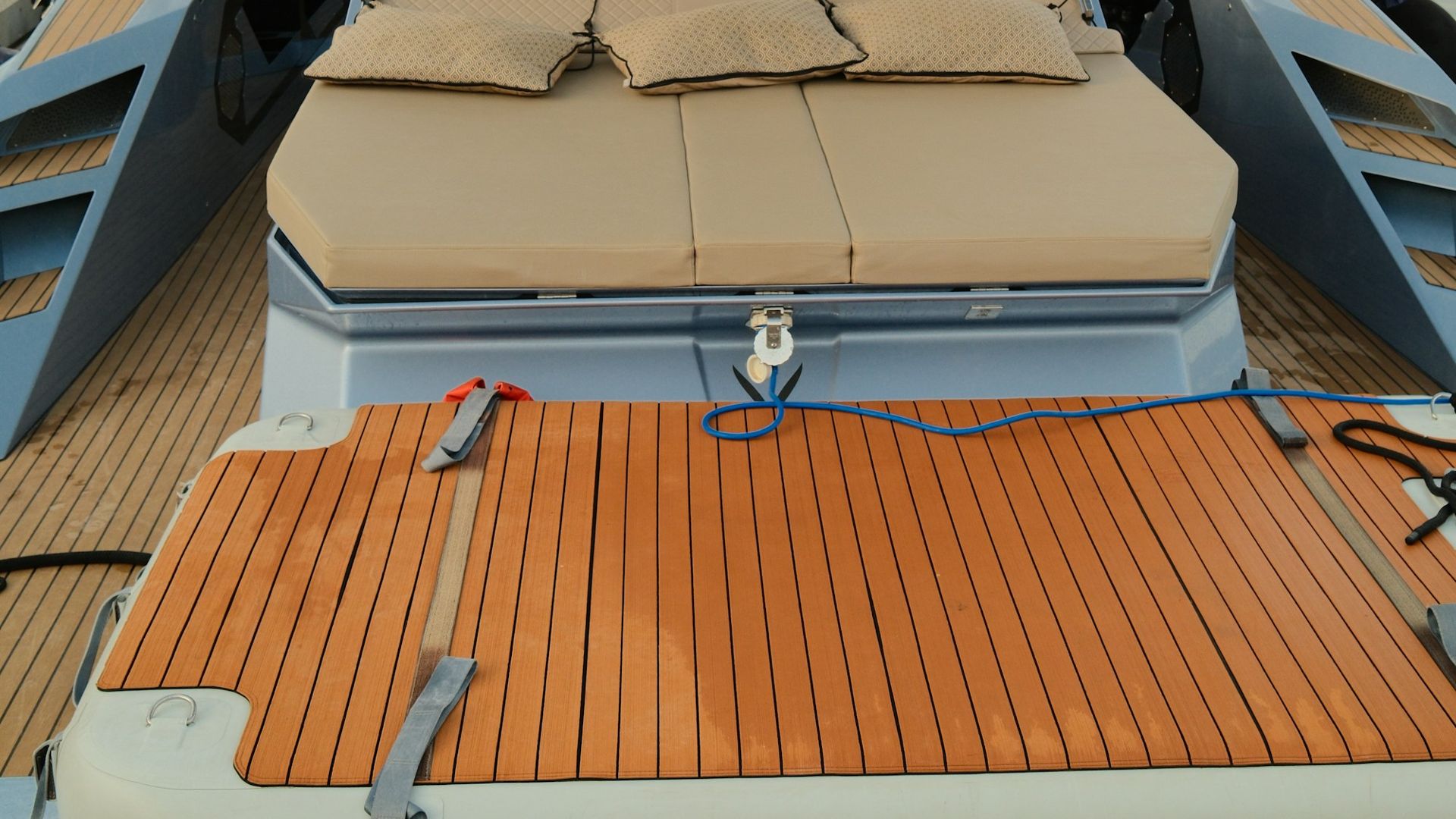
On deck, marine speakers built for salt, humidity, UV and vibration are positioned together with the seating areas.
Products used in outdoor areas in particular can be exposed to harsh conditions such as:
- Humidity
- Salt water
- UV rays
- Temperature changes
- Splashes
So marine-rated speakers should be preferred for deck or open-area applications.
Material construction, level of protection and mounting system are important criteria in product selection.
Indoors, architectural integrity comes to the fore as much as performance.
In-ceiling or in-wall speakers, when positioned correctly, deliver high sound quality while helping preserve the clean, premium lines of the yacht's design.
In our catalogue, these include Wet Sounds marine series (the REV 696 RS speaker, the RECON 6 POD-B tower speaker and the STEALTH-6 ULTRA HD-B soundbar) and the B&W Marine in-wall speakers (Marine 6 and Marine 8). Marine products are designed for an environment where salt, humidity, sun and vibration are present together.
How Should Speakers Be Placed?
Speaker placement on yachts may require different planning from a classic home system.
The most important reason is that the spaces are more compact and geometrically more complex.
In speaker placement, these should be taken into account:
- Listening positions
- Ceiling height
- Furniture layout
- Glass surfaces
- Transitions between open and closed areas
- Ambient noise from engines and mechanical systems
For example, aiming only for high volume on the outer deck is not the right approach.
Distributing the speakers correctly can spread sound more evenly over the whole area instead of delivering it very loudly from a single point.
This creates both a better and a more comfortable listening experience.
How Should Subwoofer Use Be Planned?
A subwoofer can add significant depth to the system, especially in open areas and large living zones.
But since space on yachts is limited, subwoofer placement must be done carefully.
Subwoofer solutions integrated into furniture or placed out of sight can be preferred.
The aim here is not just stronger bass;
it should be to create a more balanced and controlled system by reducing the low-frequency load on the main speakers.
On the marine side, compact subwoofers such as the REVO 8 FA S4-B, and in the saloon the in-wall B&W ISW-4, reduce the loss of space.
Products in this article


Video Systems Should Be Designed Together with the Interior
Television or screen placement should also be considered in the first stages of a yacht refit.
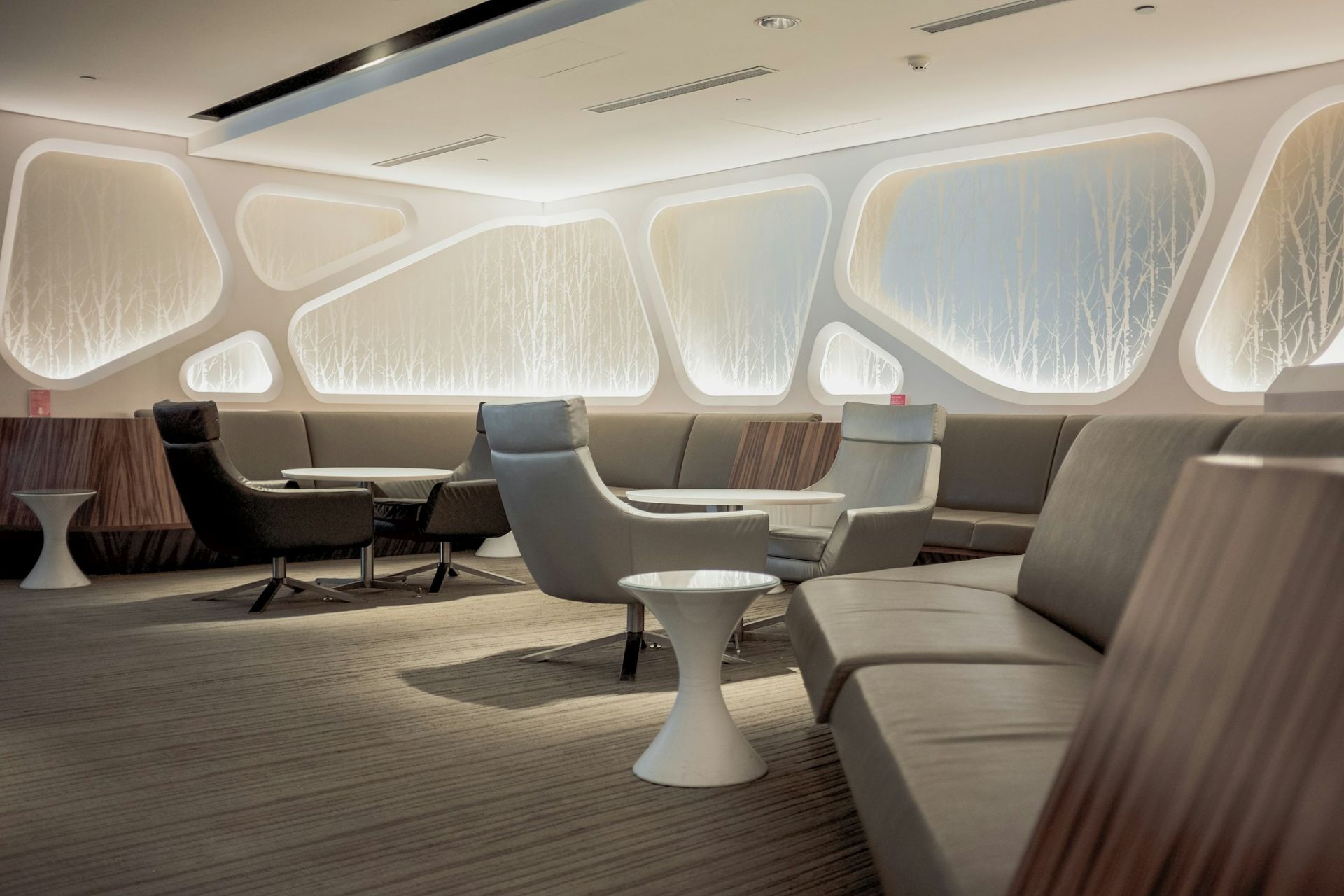
Screens, speakers and lighting are resolved in the same drawings as the saloon furniture and ceiling details.
As much as the screen size, these matter:
- Viewing distance
- Sunlight
- Viewing angle
- Furniture layout
- Electrical and data infrastructure
In some projects a television that is always visible is preferred, while some users prefer solutions that are completely hidden when not in use.
With motorised TV mechanisms, moving screen systems or special furniture integrations, video technology can be included in the yacht's design in a more controlled way.
So the video system should be treated not just as a screen choice but as an architectural and mechanical integration project.
Network Infrastructure Is the Foundation of the System
A modern yacht's audio and video systems need a strong network infrastructure.

Satellite and cellular antennas are the gateway between the onboard network backbone and the outside world.
Streaming services, smart televisions, music systems, automation, security and mobile devices may all use the same network.
To provide uninterrupted connectivity in different parts of the yacht, these should be planned at project stage:
- Network switch infrastructure
- Access point locations
- Data cabling
- Technical rack system
- Internet connection solutions
Especially on large yachts, a single Wi-Fi access point may not be enough.
A properly designed network supports not only the internet connection but the stable operation of the whole AV system.
Cabling Is One of the Most Critical Stages of a Refit
In a yacht refit, creating the required cable infrastructure while walls, ceilings and furniture are open is a major advantage.
Speaker cables, data lines, HDMI or other video signal infrastructure should be planned along the right routes.
Not only the existing system but also possible future upgrades should be considered.
Leaving extra conduit or spare data lines can make it easier to include new technologies later.
A good infrastructure should support not only today's system but also the yacht's future technological needs.
Where Should Technical Equipment Be Located?
Amplifiers, network equipment, media devices and control systems should be gathered, as far as possible, in a central and serviceable technical area.
In this area these should be taken into account:
- Ventilation
- Power supply
- Cable management
- Service access
- Humidity and temperature conditions
Using an orderly rack infrastructure instead of spreading electronics randomly across cabinets offers significant advantages for both installation and later maintenance.
In marine amplifiers, battery capacity and cable cross-section matter as much as power; models such as the SYN-DX4 (4 x 125 W) and the compact STX MICRO-4 are chosen according to that calculation.
System Control Should Be Simple
A premium audio and video system being technically advanced does not mean its use should be complicated.
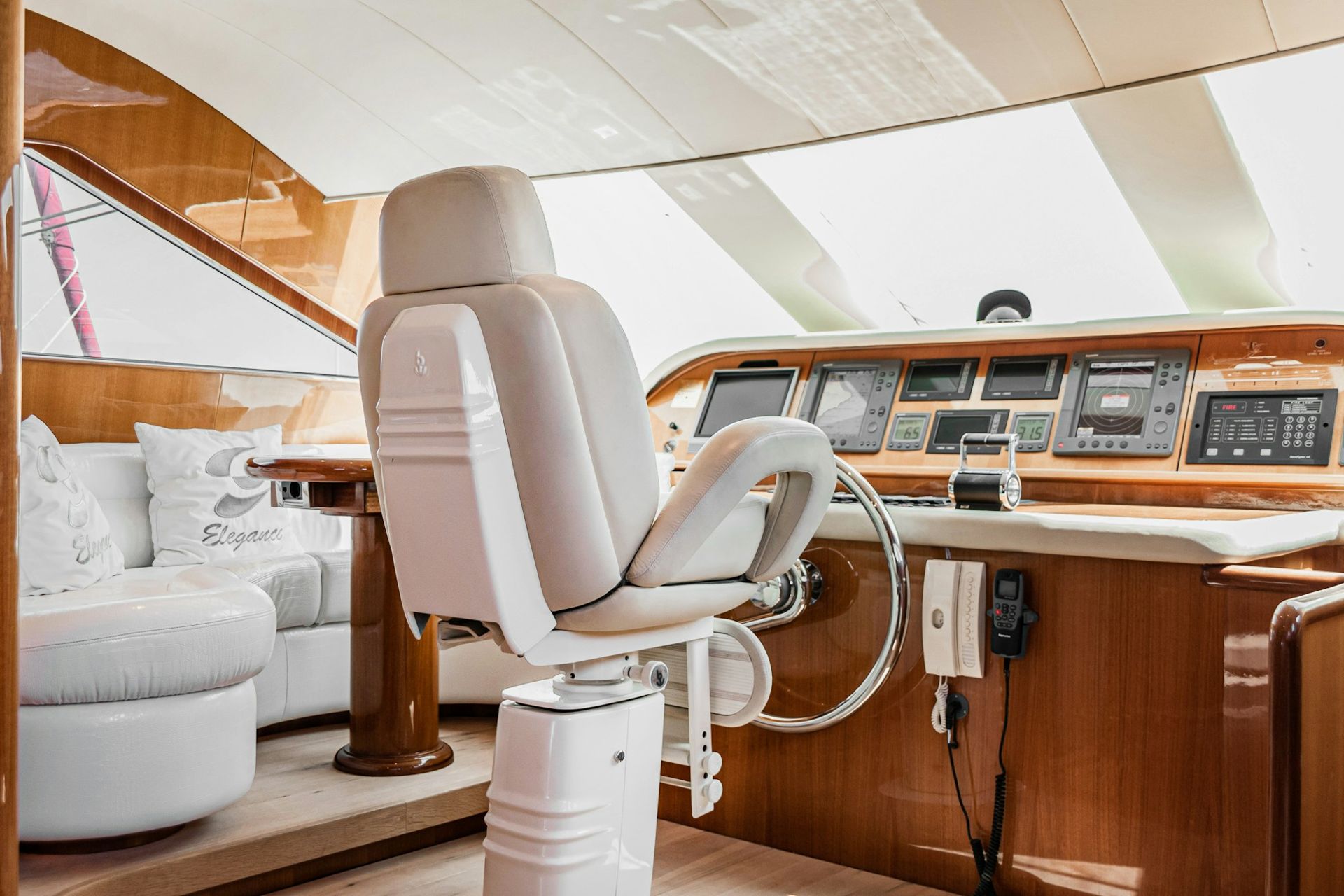
Alongside navigation equipment on the bridge, audio and video control should come down to a simple, consistent interface.
The user should be able to:
- Start the music
- Select an area
- Change the volume
- Control the television or media source
and do all this through an interface that is as simple as possible.
Control can be provided via phone, tablet, wall panel or a central automation system.
In a well-planned AV system, technology does not direct the user; it adapts to the user's habits.
Indoor and Outdoor Systems Should Be Considered Together
Life on a yacht is not limited to the interiors.
The saloon, cabins, cockpit and deck areas are often used as extensions of one another.
So when designing the audio system, how these areas work together is important.
For example, a playlist can be started in the saloon and continued on the outer deck, or played in sync across all areas.
Correct system design technically connects different areas while giving the user freedom of independent control.
The Audio and Video System Should Not Be Considered Separately from the Interior
In yacht refit projects technology should be as invisible as possible.
Instead of speakers, screens and control units looking like later additions, the aim is for them to blend with the yacht's design language.
For this, the AV system must be planned in coordination with:
- The interior designer
- The electrical team
- The furniture maker
- The mechanical team
- The automation team
This cooperation both reduces technical errors and preserves the aesthetic integrity of the yacht.
Designing a Future-Ready System in a Yacht Refit
While technology changes quickly, a yacht's lifespan is much longer.
So during a refit, instead of thinking only of today's devices, it is important that the system can be developed later.
With a modular infrastructure, sufficient network capacity, correct cabling and a scalable system architecture, new technologies can be integrated into the existing structure more easily.
That way, instead of rebuilding the whole system in a few years, only the necessary components can be updated.
Yacht Audio and Video Systems with Trio Home
A successful yacht audio and video system does not consist only of high-quality equipment.
The real difference comes from bringing technology, architecture and user experience together correctly within one project.
In yacht refit projects, Trio Home evaluates audio, video, network and control systems together with use scenarios and architectural requirements.
Correct speaker selection for indoor and outdoor living areas, multi-zone system design, video solutions, network infrastructure and system control are planned within the integrity of the project.
That way technology becomes a natural part of the living experience instead of getting in front of the yacht.
For your yacht projects, you can view marine and in-wall speaker solutions at our Istanbul showroom and get project consultancy.
Do not leave the audio and video system to the final stage of a yacht refit. Plan technology from the start of the project with the right infrastructure, the right placement and the right system design.
Contact Trio Home to evaluate custom audio, video and network solutions for your yacht and get project consultancy.
Frequently Asked Questions
When should the audio and video system be planned in a yacht refit?
At the very start of the refit. Once walls, ceilings and furniture are finished, cabling, installation and aesthetic constraints increase. If speaker zones, screen positions, the technical rack, network and control system are defined at the beginning, the technology becomes a natural part of the interior design.
What is zoning in a yacht audio system?
It means dividing the audio system into independent zones such as the saloon, master cabin, guest cabins, flybridge, cockpit and decks. Each zone can have its own volume, source and control; calm music can play in the saloon while a different playlist plays on deck, or all areas can play in sync.
Why are marine speakers needed on deck?
Outdoor areas are exposed to humidity, salt water, sun, temperature swings and splashes, and standard home speakers do not last long in these conditions. Marine speakers are designed for this environment in materials, level of protection and mounting, so they should be preferred on deck and in open areas.
How should a subwoofer be positioned on a yacht?
Because space is limited, a subwoofer can be integrated into furniture or hidden. The aim is not just strong bass but to relieve the main speakers of low-frequency load for a more balanced, controlled system. In the open air, bass gets no help from walls, so a subwoofer’s contribution is more noticeable than indoors.
Why is cabling so critical in a yacht refit?
When walls, ceilings and furniture are open, it is the easiest time to build cable infrastructure. Speaker, data and video signal lines should follow planned routes, and extra conduit or spare data lines should be left for future upgrades. Later interventions are costly and limit aesthetics.
Where should technical equipment be located on a yacht?
Amplifiers, network and media devices should be gathered, as far as possible, in a central, serviceable technical area inside a tidy rack. Ventilation, power supply, cable management, service access, humidity and temperature should be considered; equipment scattered across random cabinets makes maintenance harder.