
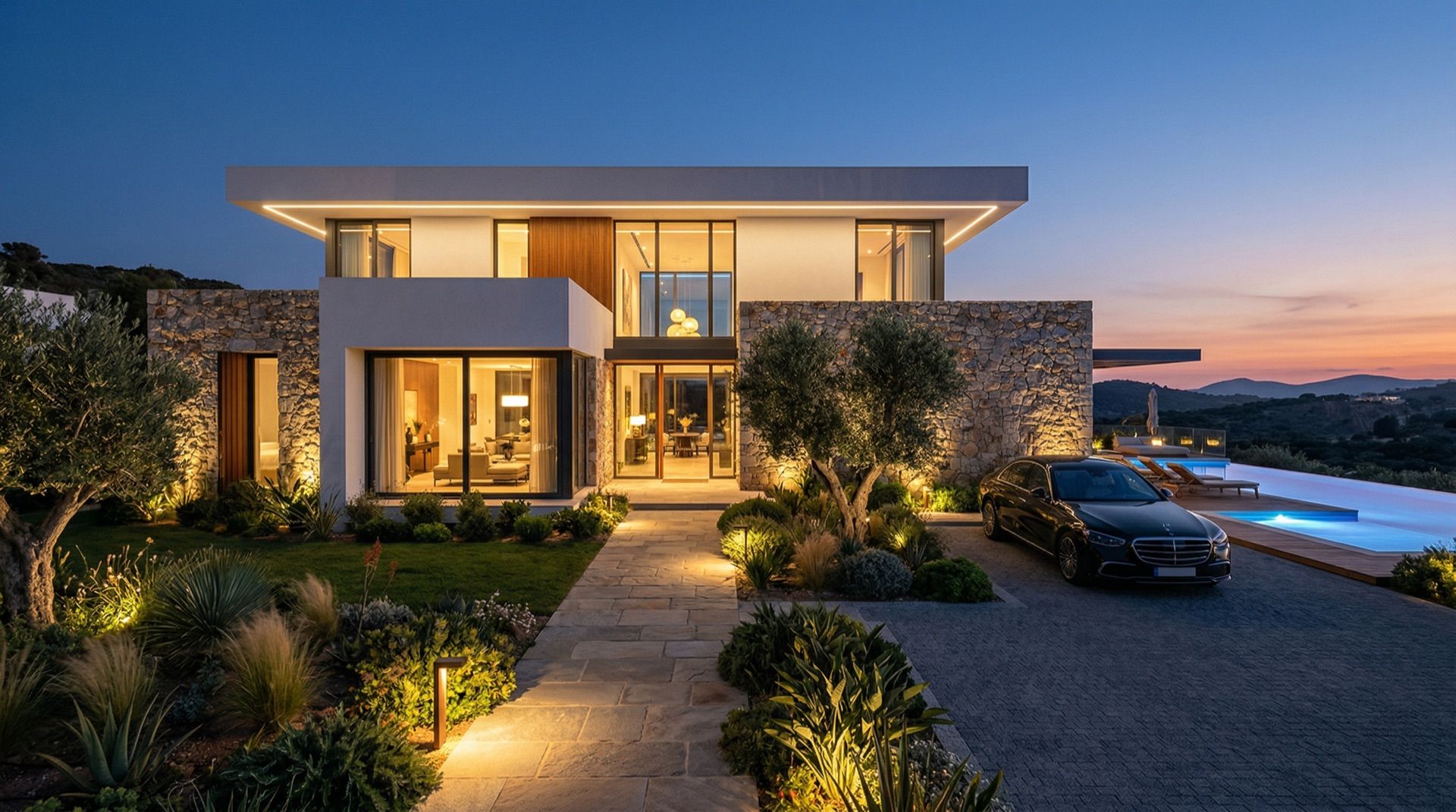
The best time to plan smart home infrastructure is when the architectural and electrical projects are prepared. Cabling, network, audio-video points and technical room decisions are made together with the other disciplines; products are chosen only after the living scenarios are clear.
In a new villa project, besides the architectural plan, material choices and interior details, there is one more subject that needs to be considered early: smart home infrastructure.
Lighting, curtains, climate control, security, audio, video and network systems may look like independent technologies added later, but in a well-designed living space all of them work together. So one of the most important decisions in a smart home system is not which products to use, but when to plan the infrastructure.
When Should Smart Home Planning Start?
The best time is, if possible, when the architectural and electrical projects are being prepared.
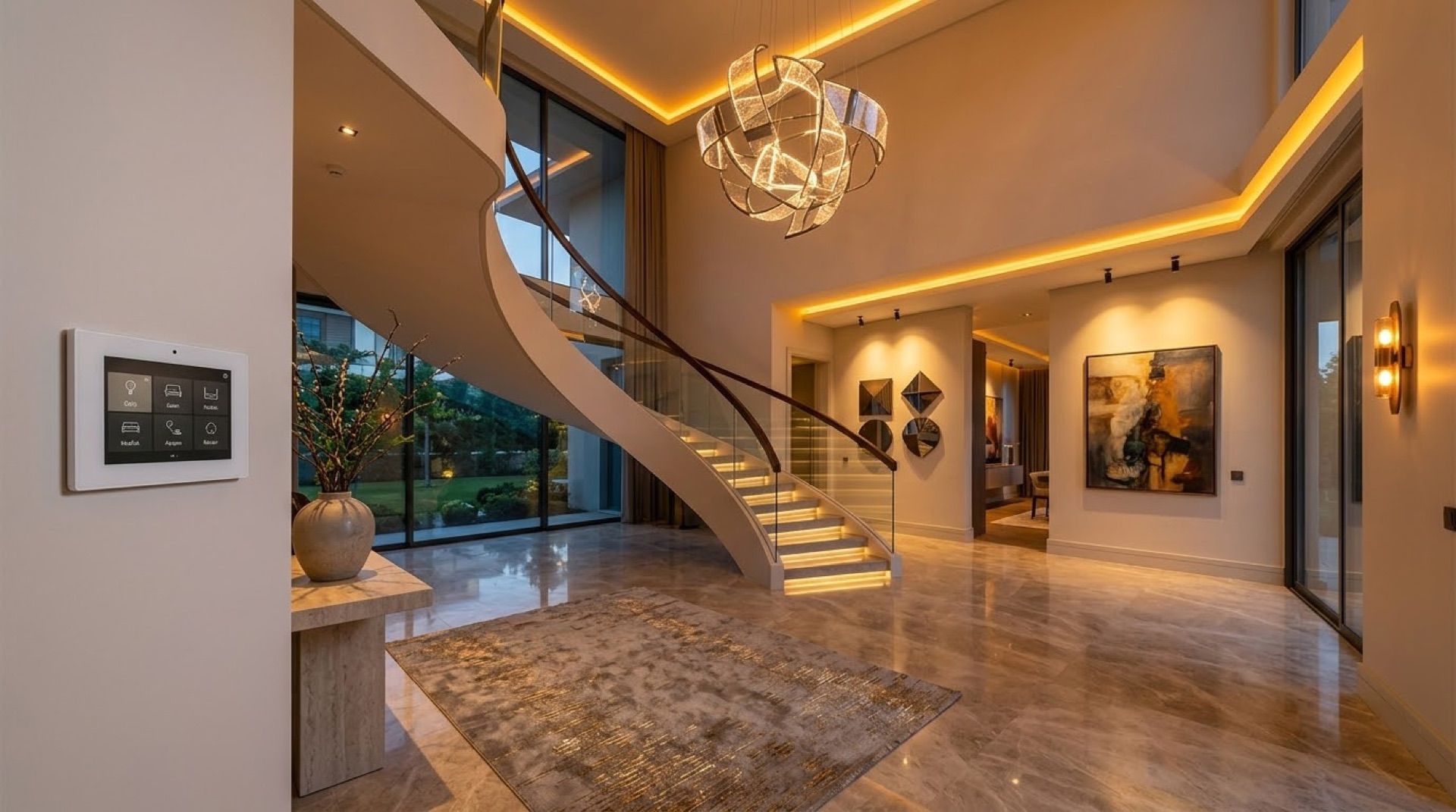
Lighting scenes, keypad positions and cable routes should be settled at the same time as the electrical design.
Defining user needs while the villa is still at design stage makes it possible to plan the electrical, data, audio, video and automation infrastructure together with the other disciplines.
At this stage not only today's needs but also technologies that may be added later can be taken into account.
For example, the following can be decided before construction even starts:
- Where automated lighting scenarios will be used
- Where motorised curtains and shutters will be located
- How air conditioning and underfloor heating will be controlled
- Which rooms the multiroom music system will cover
- Television, home cinema and projection points
- Wi-Fi access point locations
- Security cameras and entry systems
- The technical rack and central equipment areas
This approach preserves architectural integrity and reduces later interventions during construction.
Why Should It Be Considered Before or Together with the Electrical Project?
Many functions in smart home systems can require a different infrastructure from standard electrical installation.
If lighting is controlled centrally, the cable topology may change accordingly. Motorised curtains need power and control points. If a multiroom audio system is planned, speaker cables must reach the right zones.
Network infrastructure today is not just for connecting to the internet; it is the basic communication layer for many devices, from televisions to audio systems, automation and security.
So considering the automation project only after the electrical work is complete may require re-cabling or intervening in architectural surfaces at some points.
Which Decisions Are Made at Which Project Stage?
Smart home infrastructure is not built in one go but through a series of decisions spread across the stages of construction. The sequence below summarises which decision should be made at which stage:
- Concept and architectural design: living scenarios, rooms with audio-video, technical room and rack location.
- Electrical and low-voltage design: cable topology, data and speaker lines, power points for motorised curtains, lighting control infrastructure.
- Rough construction: conduit, cable pulling, marking support points behind screens and for in-wall speakers.
- Plaster, paint and furniture: mounting speakers and screens, applying acoustic panels and decorative surfaces.
- Commissioning: programming, setting up scenarios, measurement and fine-tuning, user training.
Can a Smart Home System Not Be Added Later?
Of course it can.
Especially in renovation projects, wireless or hybrid automation solutions can offer significant advantages. But in a villa built from scratch, planning the system from the beginning gives much more design freedom.
The aim is not to use as much technology as possible, but to create a technology infrastructure that is invisible yet works exactly when needed.
In a well-designed system, the user does not have to think about the technical structure in the background.
When a single "Leaving Home" scenario is run, selected lights can turn off, curtains can move to the desired position, the climate system can switch to economy mode, and the home's different systems can be part of the same scenario.
Technology thus becomes a natural part of the living space instead of getting in front of it.
Why Is Network Infrastructure at the Centre of the Project?
In modern villas a strong network infrastructure is no longer optional but one of the core components of system design.
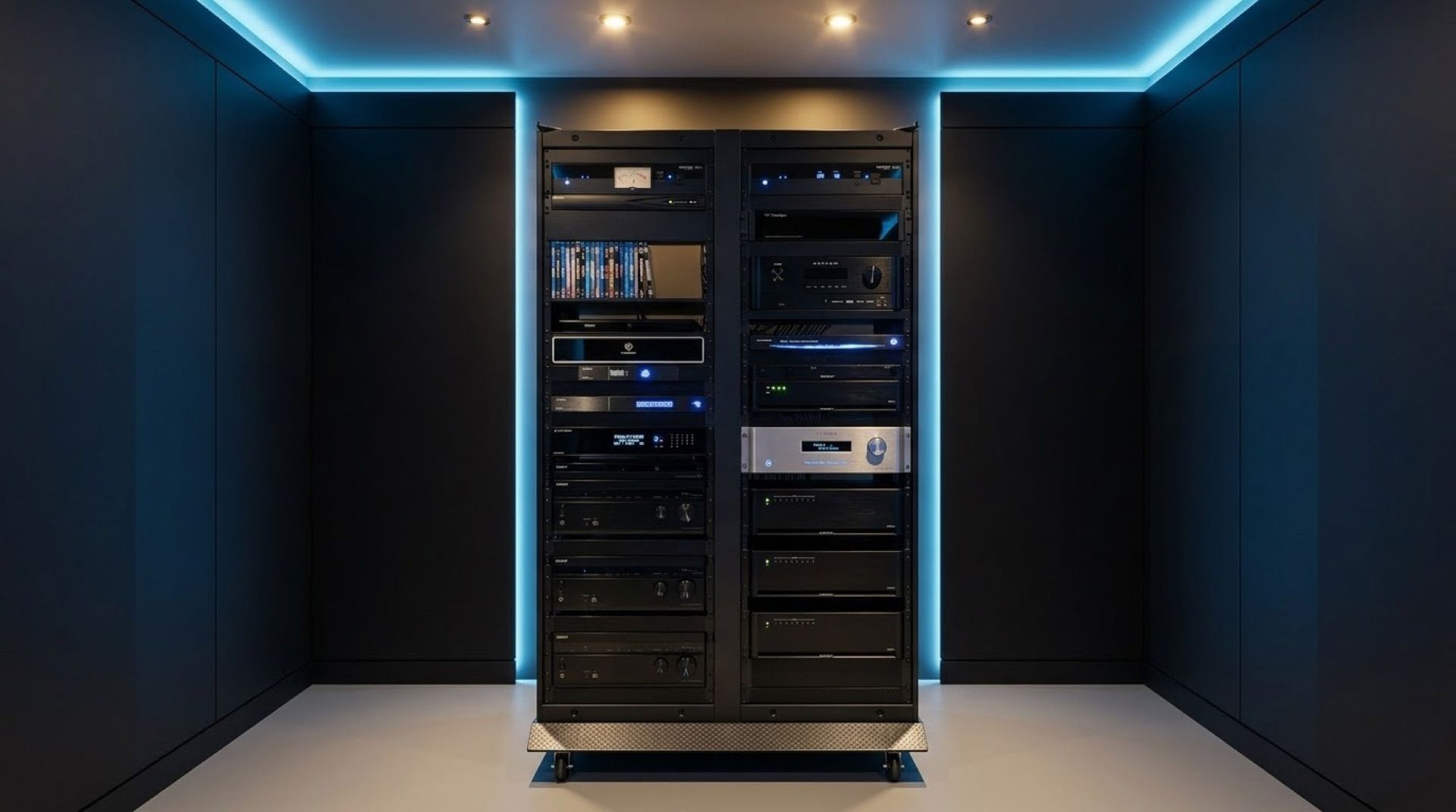
The technical rack that houses network, audio and video equipment is planned together with its ventilation and service access.
High-resolution video services, music streaming systems, smart televisions, automation systems, security cameras and mobile devices may all use the same network.
Especially in large, multi-storey buildings, a single strong modem may not be enough.
Determining access point locations, data lines, switch infrastructure and technical rooms at project stage helps create a more stable, manageable and future-ready system.
Short Checklist for Network and the Technical Room
- A wired data line to every room and possible screen point
- Access point locations set according to floors and outdoor areas
- A central, ventilated and serviceable technical room or rack area for switches and equipment
- Speaker cables gathered at one central point
- Spare conduit and cable routes for future additions
- Planning of power supply and uninterruptible power in the technical room.
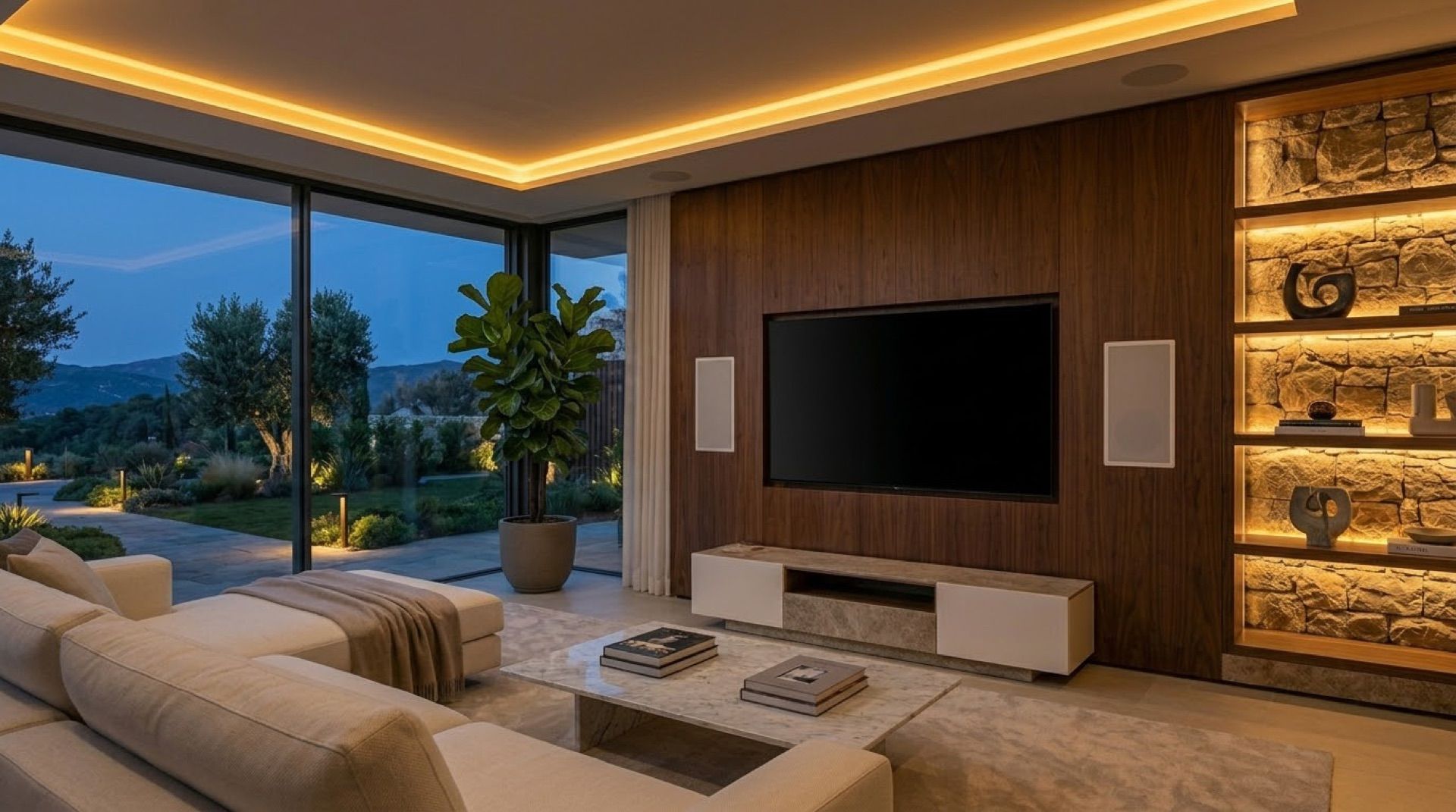
When planned with the interior design, in-wall speakers deliver cinema and music without taking up space in the room.
Audio and Video Systems Should Be Part of the Architectural Project
In many projects audio and video systems are considered after the decoration is finished. But especially if in-wall speakers, invisible speakers, Dolby Atmos home cinema or a multiroom music system will be used, determining equipment positions at the architectural stage is a major advantage.
Instead of placing speakers only in "a spot that is left", room geometry, furniture layout and the listening position can be taken into account.
Likewise, for televisions or projection systems, viewing distances, cable routes and equipment points can be solved in advance.
In the end, instead of compromising architecture for technology, technology and architecture are designed together.
Products in this article




Solutions Commonly Used in Villa Projects
- In-ceiling and in-wall speakers: B&W CCM663, B&W CWM7.3 S2, and in the higher segment MartinLogan Monument 7XW.
- Bass without taking up space: the in-wall B&W ISW-4 subwoofer.
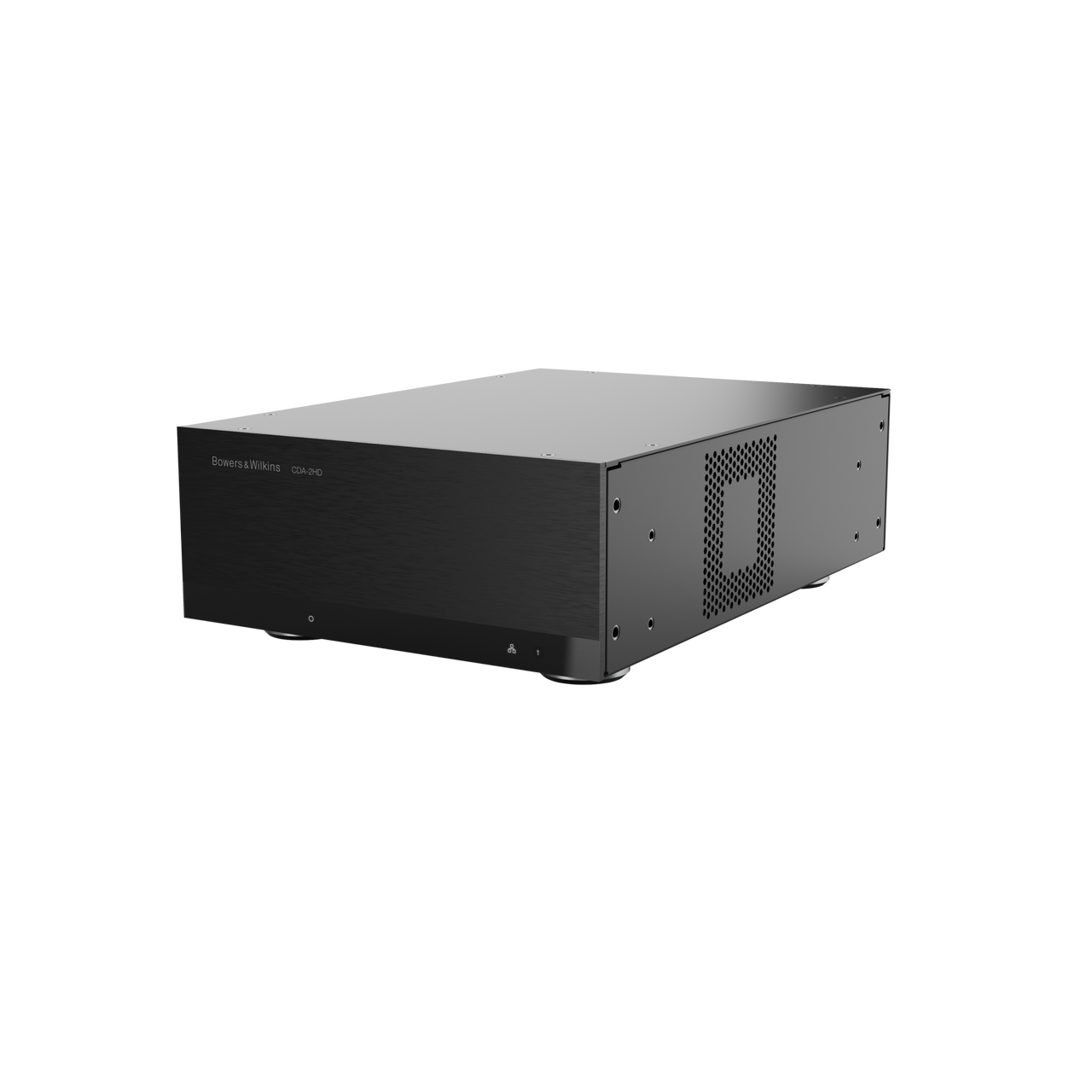
- Multi-zone music: the B&W CDA-16 16-channel distribution amplifier (CDA-4D for smaller installations).
- Private cinema room: speakers such as the B&W CT8.4 LCRS that can be mounted behind an acoustic screen or inside the wall.
- Garden and pool: B&W AM-1 and the MartinLogan Outdoor Living Foundation 8.1 System.
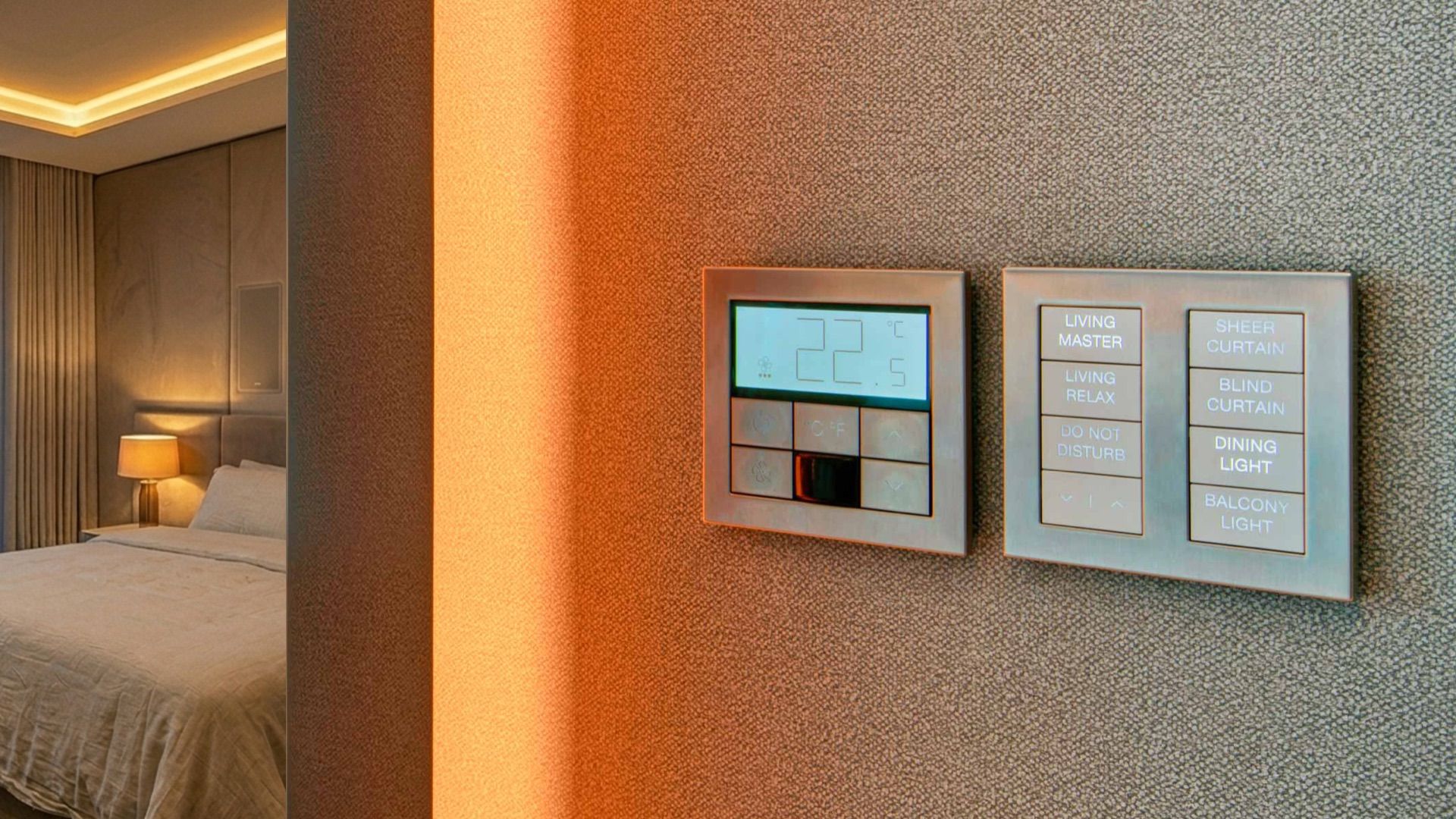
Lighting, shading and climate control from a single keypad — expandable later when the infrastructure is right.
Future Needs Should Also Be Considered Today
A villa's lifespan is much longer than that of technological devices.
A space not used today may become a study, a cinema room or another living area in a few years. New technologies may be added to the system.
So a good infrastructure should support not only today's equipment but also future improvements.
Data lines left at the right points, sufficient conduit, suitable technical spaces and a scalable network infrastructure make later changes much easier.
Project Design Before Product Selection
One of the most common mistakes in smart home projects is starting the process by choosing products.
But the first question should not be "Which automation system should we use?" but:
"How will this home be lived in?" What is the morning routine?
Which systems need to switch off when leaving the house?
Which lighting scenario is preferred when guests arrive in the evening?
In which areas will music be listened to?
How will the garden and pool area be used?
Will the home cinema be in a separate room or in the living room?
Once these questions are answered, technology can be shaped according to user habits.
A Holistic Project Approach with Trio Home
In smart home infrastructure the best results come from handling different systems with a single project approach instead of thinking of them separately.
Trio Home evaluates audio, video, network, lighting and automation systems together with the project's architectural needs and use scenarios.
If the villa is still at design stage, planning the infrastructure at the right time both eases the construction process and lets technology and architecture work together more coherently.
At our showroom in Beşiktaş, Istanbul, you can listen to in-wall speaker, multiroom and home cinema solutions and get consultancy for your project.
If you are planning a new villa project, plan the right infrastructure before moving on to choosing the right system.
Contact Trio Home to evaluate custom audio, video, network and smart home solutions for your project and book a consultation appointment.
Frequently Asked Questions
When should smart home infrastructure be planned in a villa?
Ideally when the architectural and electrical projects are being prepared. At this point data, speaker and automation lines, the technical room and device locations are resolved together with the other disciplines. Additions made after construction starts may require re-cabling or opening surfaces; early planning reduces that.
Can a smart home system be added later?
Yes, especially in renovations, using wireless or hybrid solutions. But in a villa built from scratch, planning from the start offers far more options in wired infrastructure, design freedom and aesthetics. The main limits of adding later are usually cable routes and having to open surfaces.
Why is network infrastructure so important in a villa?
Most systems, from televisions and audio to automation, security cameras and mobile devices, use the same network. In multi-storey buildings a single modem may not be enough. If access point locations, data lines, switches and the technical room are set at design stage, the network is more stable, manageable and future-proof.
Should products be chosen first, or the infrastructure planned?
Infrastructure and use scenarios come first. Instead of “Which system should we use?”, ask “How will this home be lived in?”. Once the morning routine, leaving the house, guest scenarios, music zones and cinema needs are clear, technology and products are shaped around those habits.
When should in-wall speakers and a home cinema be decided?
If in-wall or invisible speakers, a Dolby Atmos home cinema or multiroom audio are planned, positions should be set at the architectural stage. Speakers then follow room geometry, furniture layout and listening position instead of an empty spot, and cable routes and screen distances are solved in advance.
How are future needs taken into account in the infrastructure?
A villa lasts much longer than its devices. Leaving spare conduit, extra data lines, enough technical space and a scalable network makes it far easier for a room unused today to become a study or cinema tomorrow, and for new technologies to be added to the system.