
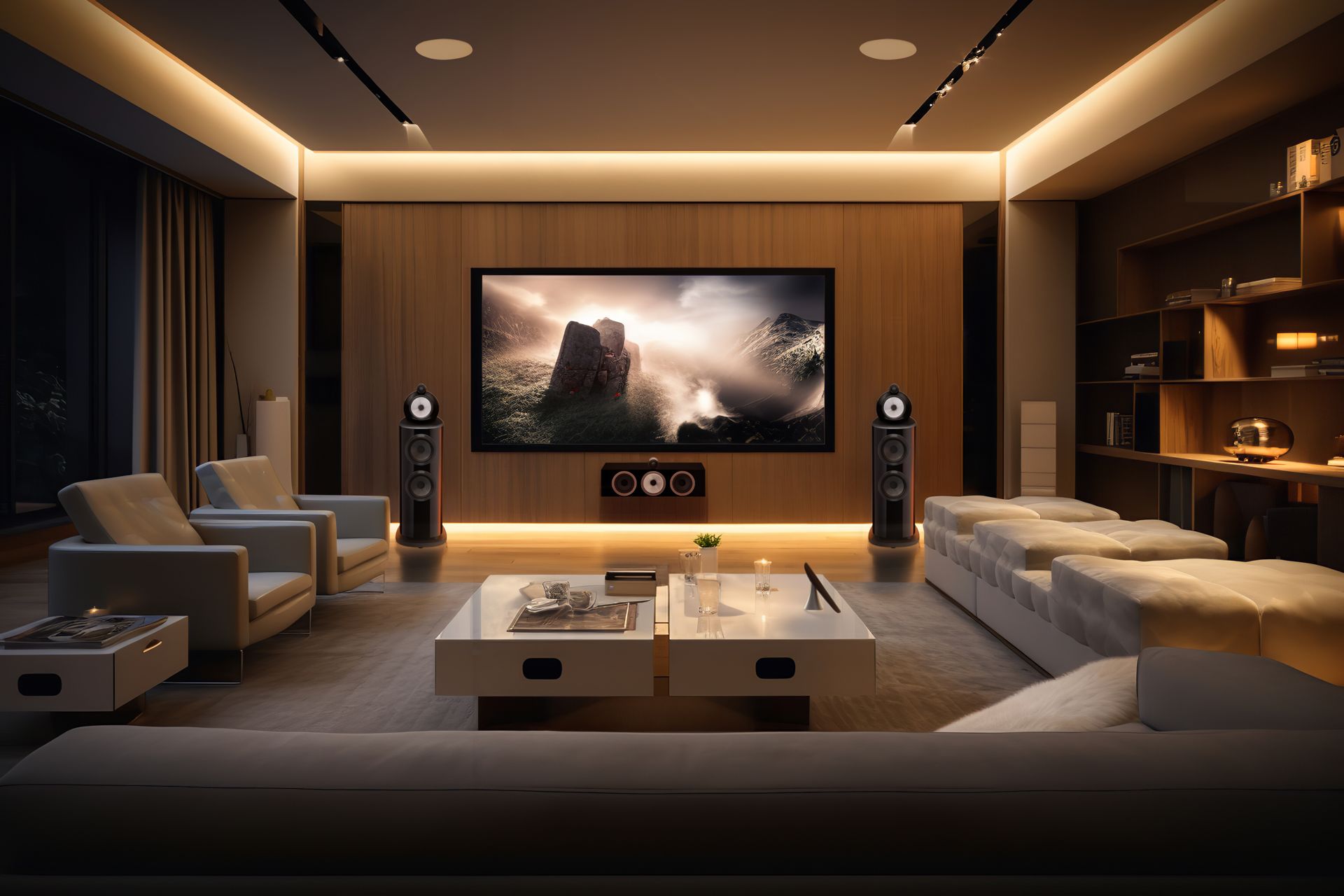
Plan the room first, then speaker placement and seating; choose equipment last. Speakers and the listening position form a roughly equilateral triangle, while wall distance and toe-in are tuned by ear. When panels are not enough for bass problems, bass traps, subwoofer position and measurement come into play.
Getting the performance you expect from a high-end audio system is not just a matter of choosing the right speakers and electronics. Room acoustics, speaker placement and the listening position are among the most important factors that reveal a system's real performance.
Sound from a speaker does not only reach the listener directly; it interacts with the walls, ceiling, floor and furniture and creates different reflections inside the room.
So when designing a dedicated listening room, the first question should not only be "Which speaker should I choose?" but:
"How does the room receive the sound?" A well-planned listening space can deliver more controlled bass, clearer vocals, a wider stereo stage and a more natural perception of detail in the music.
Why Does Listening Room Acoustics Matter?
The physical characteristics of a listening room directly affect the character of the audio system.
Sound waves reach the listening position at different times after bouncing off surfaces in the room. Uncontrolled reflections can alter the tonal balance and the stereo image.
In a poorly planned room you may encounter:
- Build-up in the bass frequencies
- Losses at certain frequencies
- A narrowed stereo stage
- Vocals drifting away from the centre
- Lost detail
- A harsh or fatiguing listening character
Therefore the room should be treated not as something outside the audio system, but as an important component of the high-end system.
How Should Speakers Be Placed?
There is no single measurement that works for every room in stereo speaker placement. Room size, geometry, ceiling height and the speaker model all influence the right position.
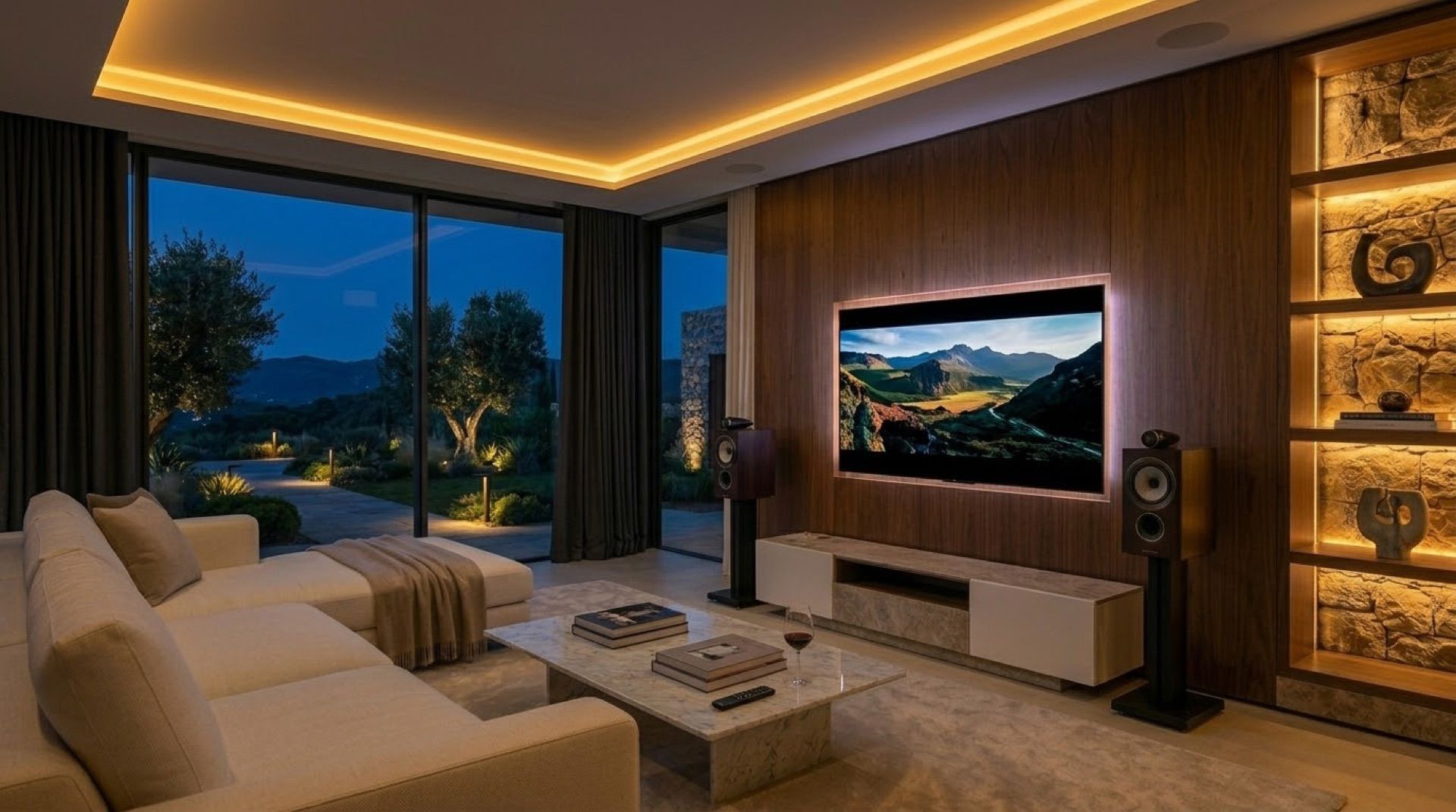
With floorstanding speakers, distance from the rear wall and symmetrical placement directly shape bass balance and the stereo stage.
As a starting point, aim for a balanced geometry between the left and right speakers and the listening position. In many stereo systems a layout close to an equilateral triangle is preferred.
The aim is not just to place the speakers symmetrically. It is important that the listener receives the left and right channels with similar timing and level, because this:
- Keeps vocals in the centre
- Makes the position of instruments on the stage clearer
- Gives the stereo image width and depth
How Far Should Speakers Be from the Walls?
The relationship of the speakers to the rear and side walls has a significant effect, especially on low- frequency performance.
When a speaker is moved too close to a wall, bass can become over-emphasised in some rooms, producing a dominant bass character instead of controlled, detailed low frequencies.
However, the ideal distance is not the same for every speaker. These should be evaluated together:
- Cabinet design
- Bass-reflex port design
- Room size
- Listening distance
The manufacturer's placement recommendations are a good starting point, but the final position should be determined by listening and measurement in the room.
Where Should the Listening Position Be?
Just as important as speaker placement is the position of the listening seat.
Placing the listening position directly against the rear wall can cause low frequencies to build up, especially. Likewise, sitting in the exact centre of the room can increase acoustic problems in some room geometries.
So when designing a dedicated Hi-Fi listening room, the speakers, the seat and the room boundaries should be treated as one system rather than independently.
Even small changes in seat position can make a noticeable difference to bass balance and the stereo image.
What Is Toe-In and Why Does It Matter?
Pointing speakers straight ahead is not ideal for every system.
Turning the speakers slightly towards the listener is called toe-in.
Changing the toe-in angle can affect:
- The centre vocal image
- The width of the stereo stage
- The perception of high frequencies
- The focus of instruments
Some speakers perform better when aimed directly at the listening position, while others create a wider stage with less angle.
So speaker angle should also be tested during system setup.
What Are First Reflection Points?
When sound from a speaker reaches the listener after bouncing off side walls, the ceiling or the floor with a short delay, it is called a first reflection.
Too many first reflections can reduce the clarity of the stereo image and make the sound stage less defined.
In professional acoustic treatment, first reflection points are identified and controlled absorption or other acoustic treatments are applied there.
However, the goal is not to eliminate every reflection. In a good listening room design the aim is the right balance between absorption, diffusion and the natural character of the room.
Are Acoustic Panels Enough?
Listening room acoustics is not just adding a few acoustic panels to the walls.
A proper acoustic project assesses these together:
- Room dimensions
- Ceiling height
- Wall surfaces
- Glass areas
- Floor covering
- Furniture
- Speaker positions
- Listening position
- Low-frequency behaviour
Standard acoustic panels are not always enough, especially for bass problems.
Some projects require bass traps, special absorption solutions or other acoustic arrangements.
So acoustic treatment is a technical part of the system design, not a decorative detail.
Why Is Symmetry Important in a Listening Room?
For stereo systems to create a correct sound stage, a balanced acoustic environment is preferred as far as possible.
For example, a large glass surface next to the left speaker and a thick curtain or bookcase next to the right speaker can make the two channels behave differently acoustically.
This can lead to:
- The stereo image shifting to one side
- A change in frequency balance
- Reduced coherence of the sound stage
Perfect symmetry is not possible in every living space. But in new projects, taking acoustics into account at the architectural design stage gives far more controlled results.
Does Furniture Affect Room Acoustics?
Yes.
Furniture and decorative items can significantly change the acoustic character of a listening room.
Rugs, sofas, curtains, bookcases and textiles affect how sound behaves at certain frequencies.
For example, large glass surfaces can produce intense reflections at high frequencies, while curtains can help control some of those reflections.
So acoustic design and interior architecture should not be considered separately.
The ideal approach is to integrate acoustic performance with the aesthetic language of the living space.
How Should a Subwoofer Be Placed?
Subwoofer placement should be approached differently from stereo speakers.
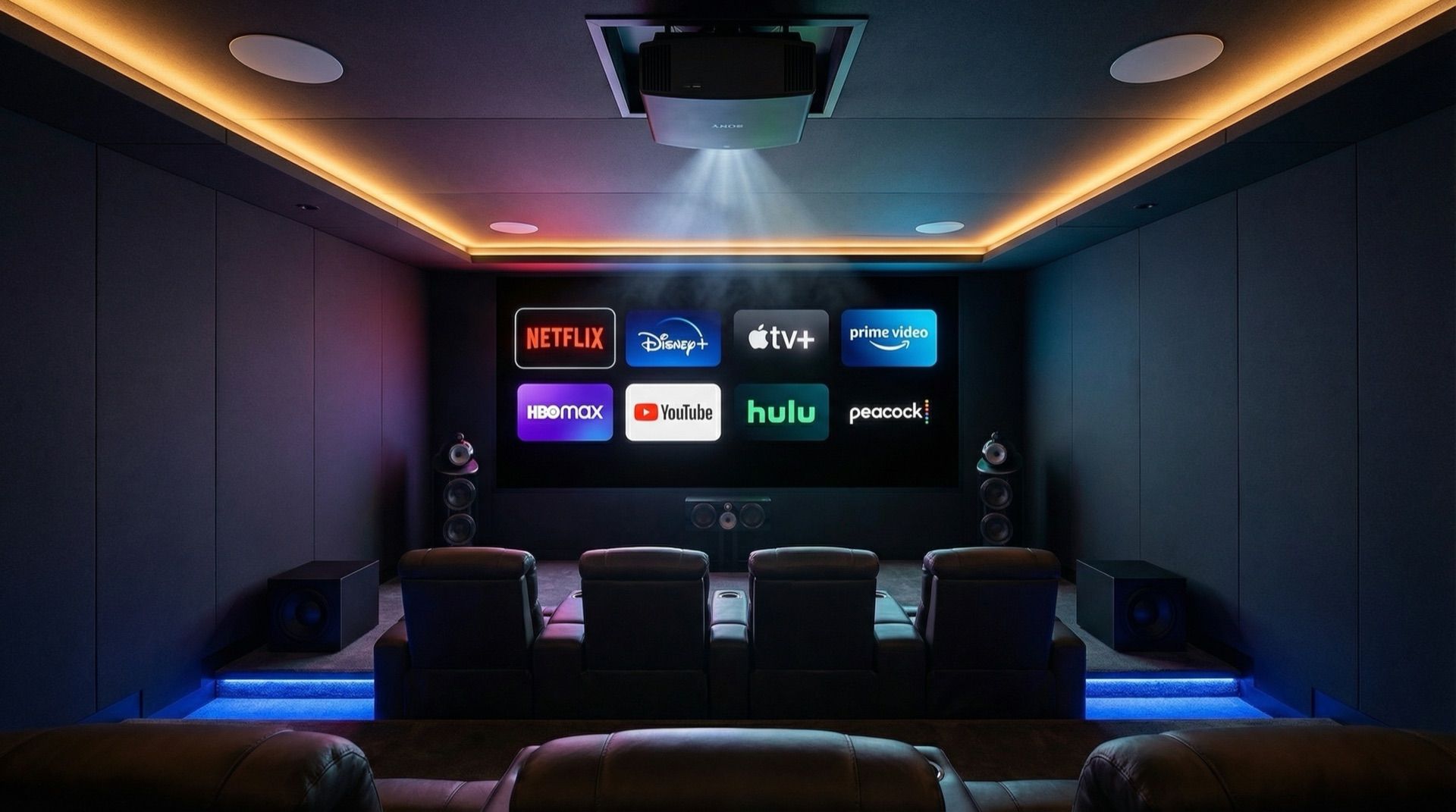
In dedicated listening and cinema rooms, subwoofer position is one of the decisions that most affects bass response at the listening seat.
Because low frequencies have long wavelengths, room geometry has a large effect on bass performance.
Moving a subwoofer just a few metres within the room can change the bass level at the listening position.
In some projects several subwoofers are used to distribute low frequencies more evenly in the room.
The aim is not simply stronger bass.
The real goal is more controlled, balanced and homogeneous low-frequency performance.
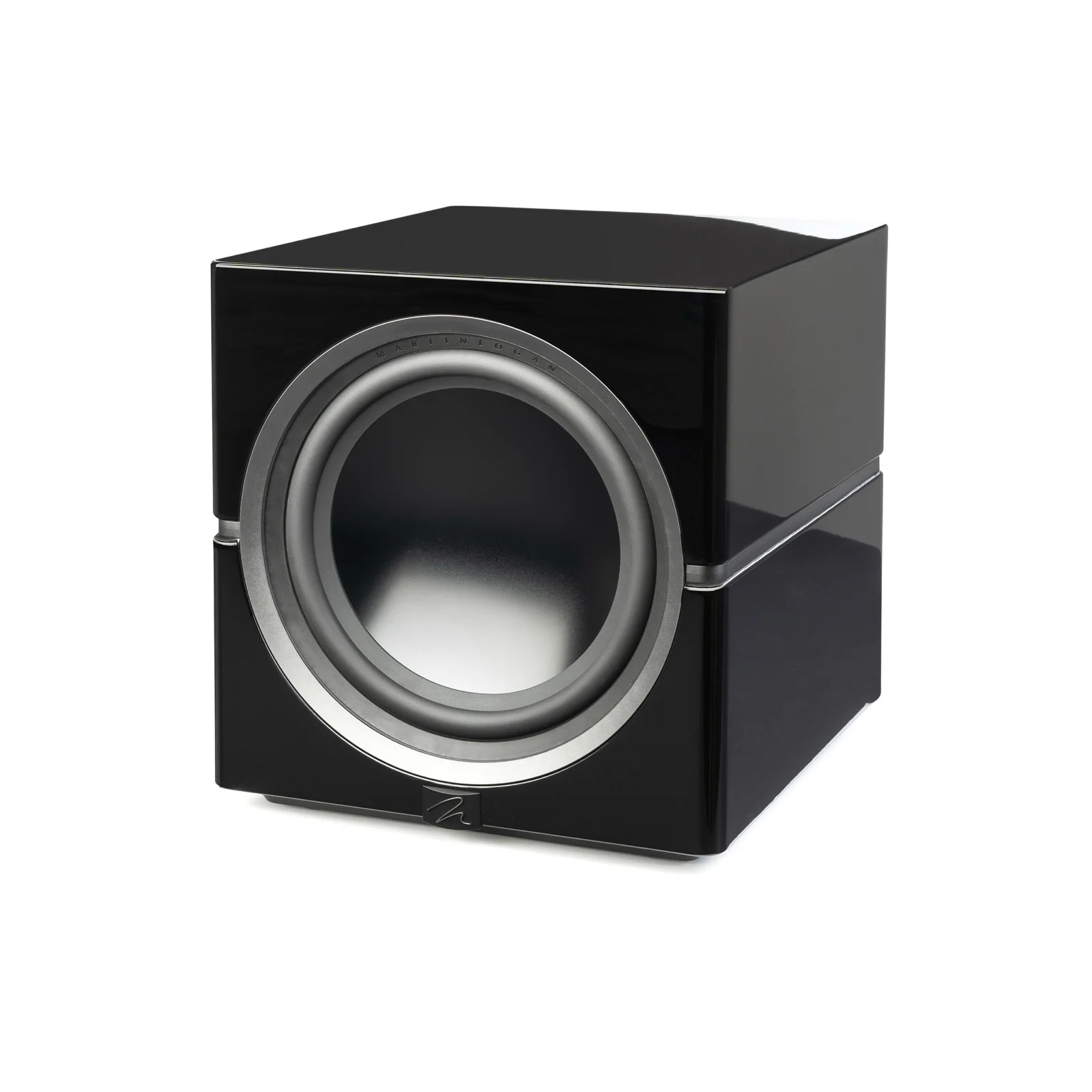
In our catalogue, B&W DB series active subwoofers stand out with their dual-driver balanced layout (such as the B&W DB3D). MartinLogan Dynamo 12 is a more accessible alternative.
Is Acoustic Measurement Necessary?
In a professional high-end system installation, tuning by ear alone is not always enough.
Acoustic measurements allow the following to be analysed more objectively:
- Frequency response
- Room modes
- Reverberation time
- Bass problems
- Interaction of the speakers with the room
- Tonal balance at the listening position
With this analysis, even small changes to the speakers or the listening position can bring significant improvements.
Room correction systems with automatic measurement can also be part of this process. See our article on Anthem ARC Genesis and room acoustics for details.
Should Speaker Choice Depend on Room Size?
Absolutely.
Using a large floorstanding speaker does not always mean better results.
In a compact listening room a very large speaker system can be hard to control. Likewise, in a large space a very small system may not deliver the intended sound pressure and dynamic capacity.
When choosing speakers, these should be assessed together:
- Room size
- Listening distance
- The user's musical preferences
- Target volume level
- Amplifier system
- Speaker sensitivity
- Architectural layout
The right system is not the biggest or most powerful one; it is the one that matches the space.
For example, in a large room a tower speaker such as the B&W 702 S3 may suit better, while in a more compact room a bookshelf model such as the B&W 705 S3 with a proper stand (the FS-805 D5 is designed for the 805 D5) may be more appropriate. Electrostatic-panel models such as the MartinLogan Impression ESL 11A need extra care in room placement.
Products in this article


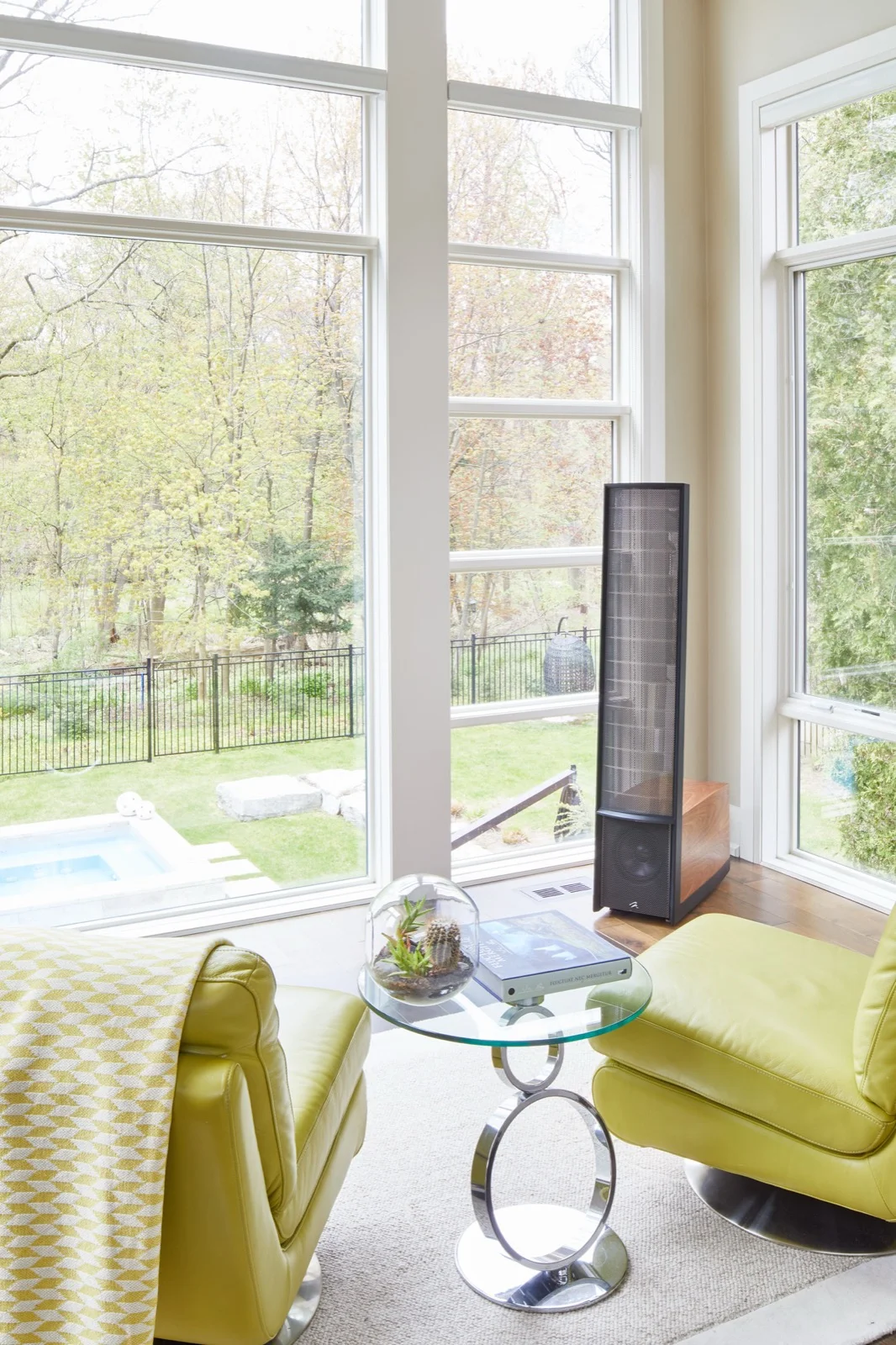
Acoustic Design and Interior Architecture Should Be Planned Together
A successful listening room should be a natural part of the living space visually as well as technically.
Deciding speaker positions, acoustic treatments, equipment furniture and cabling infrastructure at the architectural project stage reduces later interventions.
Especially in villa, residence and private home projects, it is a major advantage for the audio consultant to work with the interior architect, electrical team and project team from the start.
That way technology is not an element added to the architecture later, but a component planned from the very beginning.
High-End Listening Room Design with Trio Home
In good listening room design, the aim is not just to bring premium equipment together.
The real goal is to design the speaker, the electronics, the acoustics and the space as a single system.
When planning high-end audio systems, Trio Home considers the room geometry, acoustic conditions, listening distance, architecture and user habits together with the selection of speakers and electronics.
That way the system is assessed by its performance in the real living space, not just its technical specifications.
At our showroom in Beşiktaş, Istanbul, you can listen to B&W and MartinLogan models and get project consultancy on placement and acoustics.
A good audio system starts with the right speaker; it reaches its true potential with the right acoustics and the right placement.
Contact Trio Home to evaluate custom high-end audio and acoustic solutions for your listening room or living space and receive project consultancy.